How People Use Smartphones for News: Trends in Mobile News Consumption and Smartphone Usage
Mobile news consumption refers to the ways in which individuals access, interact with, and share news through their smartphones. Recent trends indicate a significant shift towards mobile-first behavior, transforming both audience habits and publisher strategies. Current research reveals that most news interactions are now brief and frequent, driven by notifications, social feeds, and app-centric experiences. This evolution underscores the growing importance of speed, personalization, and multimedia on smaller screens. In this article, we delve into the fundamental patterns of smartphone news usage, the app and browser behaviors that enhance engagement, the impact of personalization and algorithms on what users see, and the implications for journalists and publishers. Readers will discover practical examples, features that boost retention, demographic considerations, and actionable steps for publishers to refine monetization and user experience for mobile audiences. This guide combines trend summaries, feature comparisons, EAV-style tables for clarity, and checklists tailored for publishers, helping both consumers understand their news consumption and news providers optimize mobile delivery. We start by mapping the latest mobile news trends, then explore engagement mechanics, personalization effects, journalism impacts, demographic patterns, and future predictions that inform strategic decisions.
What Are the Latest Mobile News Trends in Smartphone Usage?
Mobile news trends illustrate a shift from desktop and long-form browsing to app-centric, short-form, and video-first consumption, all fueled by constant connectivity and social sharing. The essence of this change is straightforward: smartphones make news immediate and interrupt-driven, leading to more frequent sessions but shorter durations. This pattern favors concise headlines, visual formats, and local updates. Understanding these trends is crucial as they reshape editorial priorities, necessitating faster verification workflows, mobile-optimized storytelling, and enhanced headline and metadata practices to effectively surface content on phones. By grasping these trends, publishers can prioritize formats and distribution channels that align with contemporary attention spans, while readers can better understand how their consumption contexts influence what they encounter next.
Today’s users expect fast-loading pages, bite-sized summaries, and live or near-real-time updates, prompting publishers to invest in mobile-first video and push-based recirculation. This naturally leads us to examine how smartphone adoption has specifically transformed daily news habits.
How Has Smartphone Adoption Changed News Consumption Habits?

The widespread adoption of smartphones has converted many occasional desktop reading sessions into frequent mobile interactions, allowing users to check headlines during commutes, breaks, and those fleeting moments throughout the day. This shift is driven by always-on connectivity and push notifications, which lower the barriers to returning to an app or feed, resulting in increased daily active usage but typically shorter session lengths. A tangible benefit is the rise in daily touchpoints for publishers, enhancing opportunities for recirculation and ad exposure. However, a downside is the shallower attention per visit, which favors summaries and video clips. These behavioral patterns suggest that publishers must optimize for speed, clarity, and clear signals that encourage users to tap through for longer reads, leading us to the next question: which content types perform best on mobile?
Which Types of News Content Are Most Popular on Mobile Devices?
Mobile users are drawn to formats that cater to short attention spans and small screens: concise headlines, visual-first stories, short-form videos, local breaking updates, and personalized topic feeds that quickly surface relevant items. The key here is format fit—videos and images convey more information in less time, while short headlines and summaries are ideal for those micro-moments when users have limited time. Popular topics include breaking news for urgency, local news for immediate relevance, and lifestyle or explainers for shareability; each type thrives on mobile-native presentations like card layouts or vertical video. Understanding which formats and topics resonate best on phones helps creators determine when to send alerts, produce quick video clips, or prepare more in-depth reads for users who seek deeper engagement.
How Do People Engage with News Apps on Their Smartphones?
Engagement with news apps on smartphones relies on a select set of features—personalized feeds, push notifications, offline reading, fast load times, and rich media—that collectively influence return frequency, session length, and retention. These features enhance engagement by reducing friction and increasing relevance: personalization highlights stories likely to interest users, push notifications encourage return visits, and offline reading maintains utility in low-connectivity situations. For publishers and product teams, measuring engagement typically revolves around DAU/MAU ratios, retention cohorts, average session duration, and recirculation rates; optimizing these metrics requires a balance between re-engagement tactics and respect for user preferences to prevent churn. To make these trade-offs practical, the next section compares core app features with their expected engagement impacts using an EAV-style table to clarify which features yield which outcomes.
Below are introductory lists highlighting the highest-impact engagement drivers that product and editorial teams should prioritize to enhance mobile retention without alienating users.
- Personalization boosts relevance and session depth on average.
- Fast-loading articles and optimized images significantly reduce bounce rates.
- Push notifications drive return visits but should be carefully segmented to avoid opt-outs.
- Rich media, such as short videos and audio, increases time-on-content and shareability.
These drivers lay the groundwork for app-level experiments and monetization strategies, which we further illustrate in the feature-impact comparison table that follows.
Different app features influence engagement metrics in predictable ways; the table below maps common features to the engagement attributes they most frequently affect and their typical impact level.
This comparison clarifies that personalization, notifications, and media investments typically yield the highest engagement returns, while speed and offline capabilities ensure utility for intermittent connectivity. The next section delves into specific features and their implementation nuances.
What Features Drive Higher News App Engagement?
Key features that consistently drive engagement include personalized recommendation engines, offline article caching, integrated short-form video, bookmarking and reading lists, and user-friendly in-article layouts with clear metadata. These features work by aligning content with user interests and minimizing friction—offline caches ensure content is readily available, while bookmarking encourages return visits for deeper reads. A best-practice tip is to prioritize features that enhance measurable retention (e.g., personalized recirculation) before adding novel UI enhancements. Implementations should also be privacy-conscious, providing transparent controls so users can opt into personalization without feeling monitored, which naturally leads us to how push notifications fit into this engagement ecosystem.
How Do Push Notifications Influence Mobile News Consumption?
Push notifications are among the most effective tools for re-engagement: they can significantly boost return visits but may also lead to increased opt-outs if sent too frequently or without clear relevance. The mechanism at play is behavioral interruption—notifications draw users back into the app during micro-moments, but poorly targeted messages can create annoyance that diminishes long-term retention. Best practices include segmenting by interest, limiting frequency per user, and using contextual timing (e.g., morning briefings vs. breaking alerts) to enhance effectiveness. Publishers that combine thoughtful segmentation with clear unsubscribe options typically experience higher sustainable engagement and lower churn, setting the stage for a discussion on how personalization mechanics influence both engagement and long-term news consumption habits.
Following this section’s detailed product and measurement guidance, it’s essential to briefly acknowledge how publishers and information hubs approach monetization. Many information hubs and news & blog publishers balance ad-supported models, affiliate content, and subscription tiers to monetize mobile engagement while preserving user experience. Ad-supported strategies rely on high DAU/MAU and time-on-content to generate revenue through mobile ad networks, while subscriptions focus on retention and trust by reducing ad load in exchange for recurring payments. Affiliate integrations can complement both approaches by aligning product recommendations with personalized feeds, but publishers must implement them transparently to maintain reader trust. These monetization options directly connect to the engagement mechanics discussed above: higher engagement and improved personalization typically enhance revenue opportunities, while intrusive tactics risk driving users away.
How Do Personalized News Feeds Affect Mobile News Consumption?
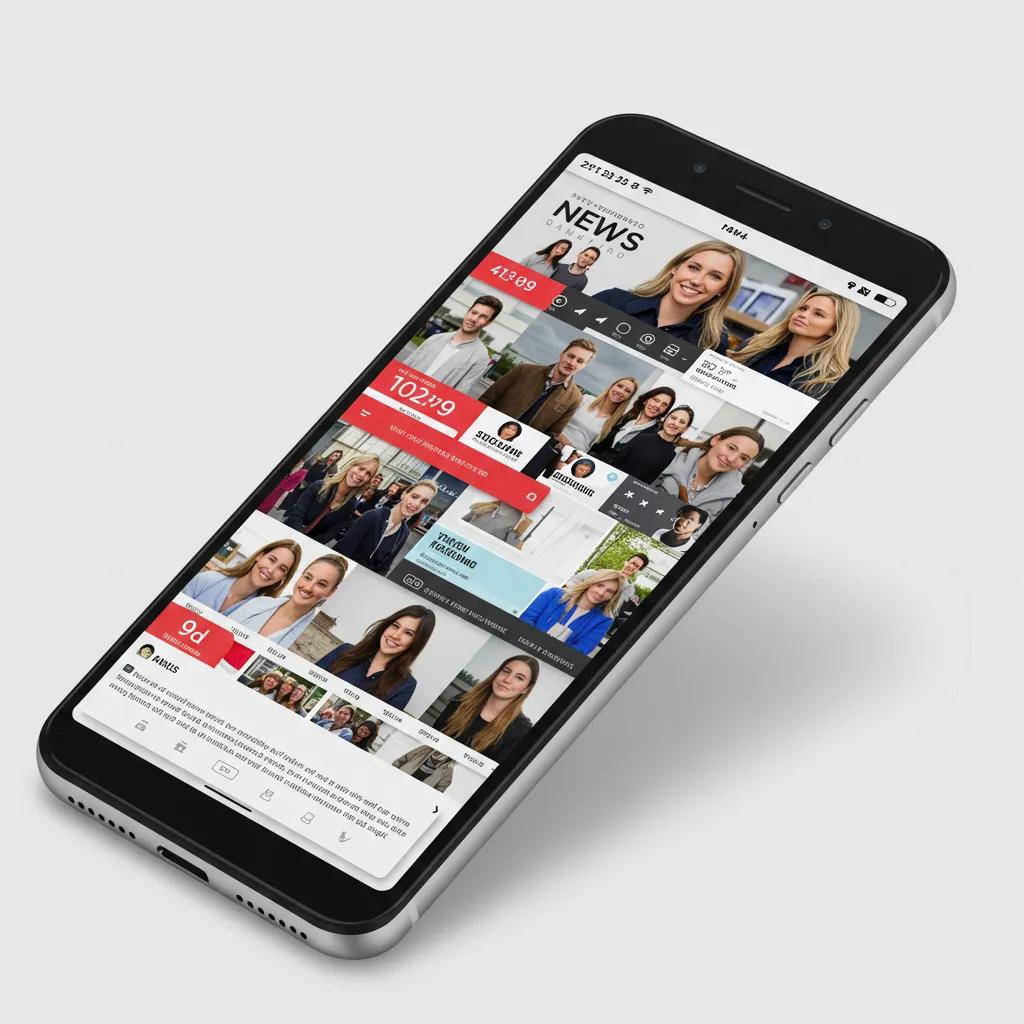
Personalized news feeds customize content to individual preferences through collaborative, content-based, or hybrid recommendation approaches, enhancing perceived relevance and session depth while raising questions about diversity and misinformation risks. The mechanism is algorithmic ranking: recommendation systems score and order items so users see content most likely to engage them, boosting short-term metrics like clicks and time-on-content. The benefit for readers is heightened relevance and fewer irrelevant items; however, the downside for public discourse is a potential reduction in serendipitous discovery and increased echo-chamber effects. Publishers must therefore balance personalization with deliberate diversity-promoting signals and user controls to ensure broader news exposure.
Below is an EAV-style table comparing the main personalization approaches with typical outcomes, assisting product and editorial teams in selecting suitable models for their objectives.
This table illustrates that while collaborative filtering often yields strong engagement, hybrid or rules-enhanced approaches better preserve content diversity and editorial influence. The following section describes how personalization shapes preferences and user expectations.
What Role Does Personalization Play in User News Preferences?
Personalization increases the likelihood that users will encounter stories aligned with their interests, typically deepening session engagement and enhancing satisfaction metrics when implemented with consent and transparency. The reason is that curated feeds lower the discovery cost for users by surfacing relevant items, prompting longer interactions and more frequent returns. However, without controls that expose differing perspectives, personalization may narrow the information diet and limit serendipitous exposure to new topics. Offering adjustable personalization settings and periodic diversity injections can help maintain user trust while preserving the engagement benefits of tailored feeds, which naturally raises the question of how the underlying algorithms determine visibility.
How Do Algorithms Shape the News People See on Smartphones?
Algorithms—ranging from simple rules-based ranking to complex machine learning models—determine story visibility by weighing signals such as recency, engagement likelihood, user behavior, and editorial priorities, resulting in a filtered subset of available content for each user. The mechanism involves signal aggregation and scoring: algorithms predict which items a user will click, read, or share and rank them accordingly, often optimizing for short-term engagement metrics. Practical implications for publishers include the necessity to optimize headlines, tags, and structured metadata to enhance discoverability, while also advocating for transparency in algorithmic choices to maintain reader trust. When publishers combine algorithmic ranking with clear user controls, they can more effectively manage the trade-offs between relevance and diversity.
What Is the Impact of Mobile Devices on Modern Journalism?
Smartphones have accelerated the pace of publishing, popularized mobile-native storytelling formats like vertical video and live updates, and shifted newsroom decision-making towards metric-driven workflows that prioritize speed and relevance. The mechanism at play is distribution immediacy: mobile platforms shorten the time between event and broadcast, increasing pressure on verification and on-the-ground reporting practices. Benefits include broader audience reach and richer multimedia storytelling, while challenges encompass heightened misinformation risks and the temptation to prioritize clicks over context. Journalists and editors must therefore adopt new verification workflows and mobile-first editorial processes to maintain accuracy without sacrificing timeliness.
The next section outlines how these behavioral and technical shifts concretely alter reporting processes and newsroom tools.
How Has Mobile News Consumption Changed Journalistic Practices?
Mobile news consumption has shortened feedback loops and made continuous updates a standard part of reporting, with journalists frequently publishing incremental updates rather than single comprehensive stories. This shift is driven by user expectations for constant freshness and the low friction of mobile publishing tools, encouraging live blogs, pushable breaking alerts, and rapid social distribution. This increased cadence necessitates robust verification steps embedded in newsroom tools to avoid amplifying errors; it also encourages journalists to adopt multimedia skills—video capture, short-form edits, and audio tips—to meet mobile format demands. Tools that support rapid fact-checking, source verification, and mobile-friendly CMS entry help maintain quality while aligning with audience expectations for speed.
What Challenges and Opportunities Do Smartphones Present for Journalists?
Smartphones offer the opportunity to reach larger, more diverse audiences through mobile distribution, enabling low-cost multimedia production and rapid engagement tracking for editorial learning, while also presenting challenges such as speed versus accuracy trade-offs, monetization pressures, and the spread of misinformation. The mechanism linking these outcomes is accessibility: anyone can publish from a phone, increasing both the volume of eyewitness content and the difficulty of vetting it. Recommended newsroom strategies include explicit verification protocols for mobile-sourced material, diversified revenue approaches to mitigate click-chasing incentives, and investment in training for mobile reporting techniques to leverage the medium responsibly. These operational changes also intersect with audience segmentation trends discussed next.
How Do Demographics Influence Smartphone News Usage?
Demographics—age, location, lifestyle, and device ownership—strongly influence when, where, and how people consume news on smartphones, affecting format preferences, platform choice, and engagement patterns. Younger cohorts typically favor social platforms and app-based feeds with video-first formats, while older cohorts may still use mobile devices but prefer longer-form pieces or curated newsletters. Urban versus rural location impacts the relevance of local coverage and the availability of high-speed connectivity, which in turn affects the feasibility of rich media delivery. Recognizing these differences enables publishers to segment content, tailoring format and distribution strategies to maximize relevance and retention.
The following subsections break down age-related patterns and how lifestyle and location create predictable usage scenarios that publishers can target.
Which Age Groups Prefer Mobile News Consumption?
Younger users—Gen Z and younger Millennials—tend to be mobile-first, favoring short-form video, social distribution, and app-native experiences for news, while older adults increasingly use smartphones but often prefer longer-form articles, email digests, and trusted sources. This platform preference is shaped by media habits and attention patterns: younger audiences have grown up with mobile and social discovery, making visual and ephemeral formats more compelling. For publishers, the practical implication is to tailor content types and tone by cohort—producing vertical clips and snackable explainers for younger users while preserving in-depth reporting and clear sourcing for older readers. These cohort distinctions suggest different engagement and monetization strategies for each audience segment.
How Do Location and Lifestyle Affect Mobile News Habits?
Location and lifestyle determine connectivity, content relevance, and preferred consumption times—commuters often consume quick summaries or audio news during transit, while remote or rural users may rely more on cached content or lightweight pages due to variable bandwidth. The mechanism is contextual availability: a user’s daily routine and network conditions shape when and which formats are most accessible, prompting publishers to offer offline reading, audio versions, and localized push alerts timed to commute windows. For practical optimization, publishers should localize headlines and leverage regional signals to highlight nearby events and services, enhancing relevance and engagement for users whose lifestyles make local news particularly valuable.
What Are the Future Predictions for Mobile News Consumption?
Emerging technologies such as AI-driven summarization, faster networks (5G/edge), immersive formats (AR/VR), and voice assistants are set to reshape discoverability, consumption speed, and monetization models on smartphones by enabling richer, faster, and more personalized experiences. The mechanism is enhanced capability: AI can condense lengthy articles into concise summaries or personalized quick-reads, 5G reduces latency for live video, and voice/AR introduce new passive and hands-free consumption modes. These trends create opportunities for publishers to deliver dynamic, context-aware content and experiment with new ad formats, subscription bundles, and affiliate integrations tailored to personalized micro-moments. Preparing for these changes requires technical readiness, privacy-first personalization, and a diversified revenue approach to capture value without compromising user experience.
Below is an EAV-style table outlining emerging technologies, their attributes, and the projected effects on usability and monetization to help product and editorial teams prioritize investments.
How Will Emerging Technologies Shape Smartphone News Usage?
In the near term, AI-driven summarization and recommendation will make news faster to consume and more tailored, while 5G will expand the routine use of live streams and higher-fidelity video on phones; over the medium term, voice and AR will create new contexts for discovery that require rethinking formats and ad placements. The mechanism is capability expansion: as devices and networks accommodate richer media, publishers can offer dynamic clips, personalized highlights, and location-aware storytelling that better align with user contexts. Tactical steps for publishers include prototyping AI summaries, optimizing media pipelines for low-latency delivery, and investing in metadata to enable new discovery methods, leading us to a prioritized list of actions news providers should take next.
What Trends Should News Providers Prepare for in Mobile Engagement?
News providers should prioritize mobile-first content workflows, privacy-first personalization, and diversified monetization strategies—balancing ad formats, subscription models, and affiliate partnerships to capture revenue without undermining user trust. Concrete actions to consider include investing in fast-loading experiences, deploying transparent personalization controls, and experimenting with contextual affiliate placements that complement editorial content. Below is a prioritized checklist publishers can use to prepare operationally and commercially.
- Optimize mobile performance: Enhance page speed, reduce payloads, and enable offline caching to lower bounce rates.
- Deploy privacy-first personalization: Provide clear controls and utilize federated or consented models to maintain trust.
- Experiment with monetization mixes: Test ad formats, subscriptions, and affiliate pairings to find the right balance for your audience.
- Invest in AI tooling: Prototype summarization and tagging to boost discoverability and reduce time-to-read.
- Train newsroom teams: Develop mobile reporting skills and verification workflows to uphold accuracy under faster cycles.
These action items translate engagement and personalization insights into concrete revenue and retention strategies for information hubs and news & blog publishers, supporting the core intent to deliver valuable content while driving sustainable traffic and monetization through balanced, user-focused approaches.
Frequently Asked Questions
1. How do smartphones influence the speed of news consumption?
Smartphones have dramatically accelerated the speed at which news is consumed. With instant access to information through apps and notifications, users can quickly check headlines and updates during brief moments throughout their day. This immediacy fosters shorter, more frequent interactions with news content, leading to a preference for concise articles and quick summaries. Consequently, publishers must adapt their content strategies to deliver fast-loading, easily digestible news that caters to the fast-paced lifestyle of mobile users.
2. What are the privacy concerns related to personalized news feeds?
Personalized news feeds raise significant privacy concerns, particularly regarding data collection and user consent. Many algorithms track user behavior to tailor content, which can lead to feelings of surveillance among users. To address these concerns, publishers should implement transparent data practices, allowing users to control their personalization settings. By prioritizing privacy-first approaches, news providers can build trust with their audience while still delivering relevant content that enhances user engagement.
3. How does mobile news consumption differ across age groups?
Mobile news consumption varies significantly across age groups. Younger audiences, such as Gen Z and Millennials, tend to prefer short-form video content and social media platforms for news, while older adults may favor longer articles and curated newsletters. This generational divide influences how news is presented and distributed, prompting publishers to tailor their content strategies to meet the distinct preferences of each demographic. Understanding these differences is crucial for maximizing engagement and retention across diverse audience segments.
4. What role do social media platforms play in mobile news consumption?
Social media platforms play a pivotal role in mobile news consumption by serving as primary sources for news discovery and sharing. Users often encounter news articles through their social feeds, which can drive traffic to publishers’ websites. The shareability of content on these platforms also enhances visibility and engagement. However, this reliance on social media can lead to challenges, such as the spread of misinformation and echo chambers, making it essential for publishers to ensure accuracy and diversity in their reporting.
5. How can publishers optimize their content for mobile users?
To optimize content for mobile users, publishers should focus on several key strategies. These include creating fast-loading pages, utilizing concise headlines, and incorporating rich media such as images and videos. Additionally, implementing personalized feeds and push notifications can enhance user engagement by delivering relevant content directly to users. By prioritizing mobile-first design and user experience, publishers can effectively capture and retain the attention of their audience in a competitive digital landscape.
6. What impact does mobile news consumption have on traditional journalism?
Mobile news consumption has transformed traditional journalism by increasing the demand for speed and immediacy in reporting. Journalists are now expected to provide real-time updates and engage with audiences through social media. This shift has led to a greater emphasis on multimedia storytelling and the need for journalists to adapt their skills to include video and audio production. While this evolution presents opportunities for broader reach, it also poses challenges in maintaining accuracy and depth in reporting.
7. How do emerging technologies affect the future of mobile news consumption?
Emerging technologies, such as AI-driven content summarization and 5G networks, are set to revolutionize mobile news consumption. These advancements will enable faster access to richer media formats, enhancing user experiences. AI can help tailor content to individual preferences, while 5G will support high-quality live streaming and immersive storytelling. As these technologies evolve, publishers must adapt their strategies to leverage these capabilities, ensuring they meet the changing demands of mobile audiences while maintaining user trust and engagement.
Conclusion
Understanding how smartphones have transformed news consumption is essential for both readers and publishers in today’s fast-paced digital landscape. By embracing mobile-first strategies, news providers can enhance user engagement through personalized content, quick access, and relevant updates. As you navigate your own news consumption habits, consider exploring platforms that prioritize these features for a more enriching experience. Stay informed and adapt to the evolving trends in mobile news by checking out our resources and insights today.