“`html
Understanding Misinformation: The Psychology Behind Why We Believe Fake News and the Impact of Cognitive Biases
Misinformation — information that is false or misleading, whether shared innocently or with intent to deceive — thrives because our minds and social systems make it easy to accept and share simple, emotionally charged narratives. By delving into the psychology of misinformation, readers can uncover the mechanisms that lend credibility to fake news, the emotional triggers that fuel its spread, and the practical steps to mitigate its effects. This article will explore essential cognitive biases, the influence of motivated reasoning and emotions, and how digital spaces amplify falsehoods. We’ll also provide actionable strategies: enhancing digital literacy, employing prebunking techniques, and utilizing evidence-based debunking. Expect to find comparative tables that clarify biases and strategies, checklists for quick source evaluation, and recent case studies that demonstrate how theory manifests in real-world scenarios. By merging psychological insights with practical tactics and tech-savvy tools, readers can learn to identify misleading claims and cultivate habits that reduce the likelihood of believing or sharing fake news.
What Are the Key Cognitive Biases That Lead to Believing Misinformation?
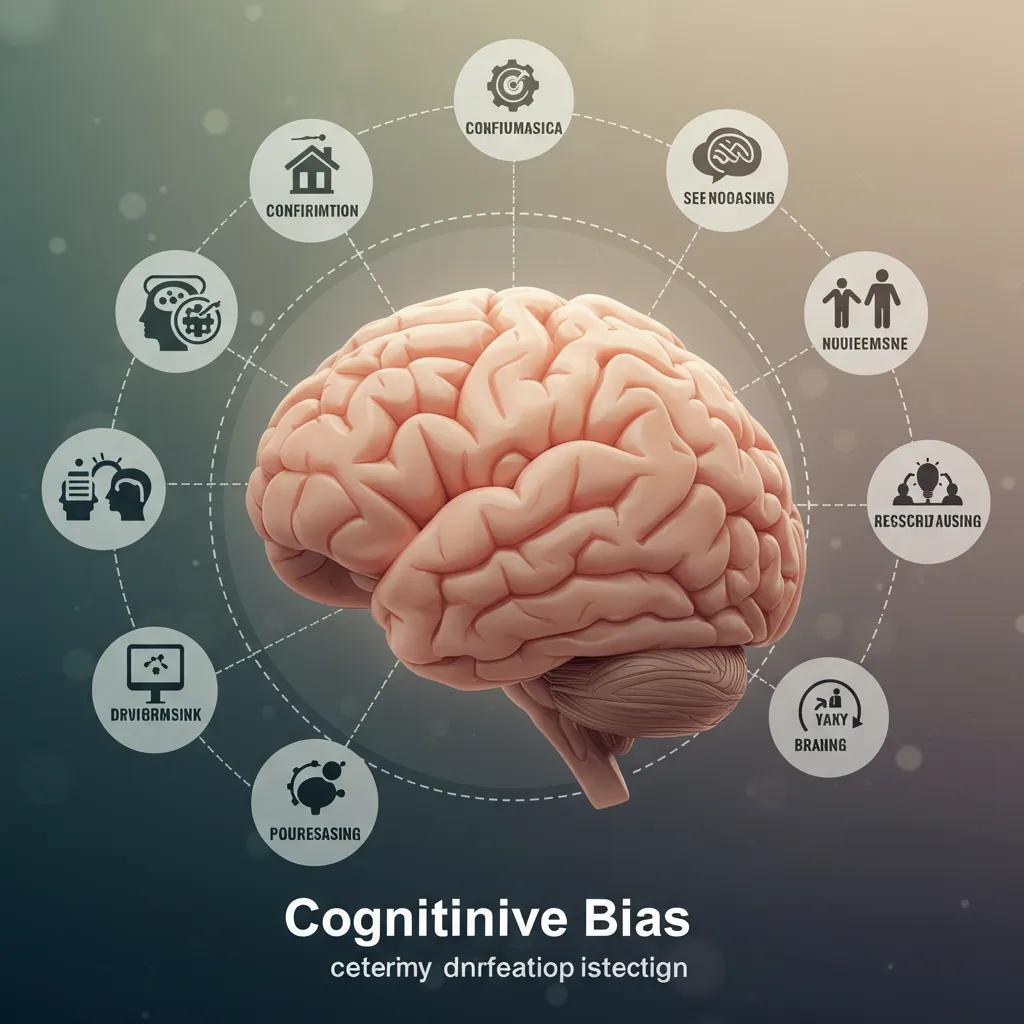
Cognitive biases are systematic deviations from rational judgment that simplify our processing but can distort our assessment of truth; they work by prioritizing familiar, emotionally consistent, or easily digestible information, leading to predictable errors in how we form beliefs. These biases — including confirmation bias, the illusory truth effect, and motivated reasoning — create cognitive shortcuts that reduce effort but heighten vulnerability to repeated or identity-consistent false claims. Recognizing these patterns helps clarify why certain claims “feel” true even when evidence suggests otherwise, and it points to mitigation strategies like intentional source-checking and exposure to diverse perspectives. Below is a concise, easy-to-digest list of key biases to keep an eye on.
- Confirmation bias: Favoring information that aligns with existing beliefs while dismissing contradictory evidence.
- Illusory truth effect: Repetition enhances perceived truth through processing ease.
- Motivated reasoning: Personal goals and identities shape how we interpret evidence to safeguard self-concept.
- Anchoring: Initial information sets a reference point that skews subsequent judgments.
- False consensus effect: Overestimating how many others share one’s beliefs, reinforcing a sense of normalcy.
This list sets the stage for the detailed comparison table below, which connects each bias to its mechanisms, examples, and mitigation strategies to empower readers to apply these insights effectively.
Different cognitive biases render false claims persuasive through unique mechanisms; the table below contrasts major biases, their psychological underpinnings, real-world examples, and practical mitigations.
This comparison underscores that cognitive vulnerabilities, combined with social cues, create resilient false beliefs; the next section delves deeper into confirmation bias and explores mitigation tactics that target memory and attention.
How Does Confirmation Bias Shape Our Acceptance of Fake News?
Confirmation bias is the tendency to seek, interpret, and remember information that supports preexisting beliefs while disregarding disconfirming evidence, influencing both exposure and memory retrieval. This bias manifests through selective exposure (following like-minded sources), biased interpretation (reading ambiguous evidence as supportive), and memory distortions that favor confirming details. For instance, someone skeptical of climate science may selectively accept anecdotal weather events as evidence while ignoring systematic studies, reinforcing a false conclusion. Practical mitigation strategies include intentionally exposing oneself to high-quality, diverse sources, practicing lateral reading to verify claims, and adopting simple rules like “pause, check, then share” to disrupt automatic sharing impulses. Recognizing that confirmation bias skews both attention and memory is the first step toward cultivating habits that counteract it.
What Is the Illusory Truth Effect and Why Does Repetition Make False Information Seem True?
The illusory truth effect arises because repeated statements become easier to process (processing fluency), and this fluency is often misattributed to truthfulness; thus, repetition boosts perceived credibility even when the content is false. Classic psychology experiments demonstrate that repetition increases agreement with statements regardless of prior implausibility, and modern social platforms amplify repetition through resharing and algorithmic promotion. A viral false health claim that repeatedly appears in feeds will gradually feel familiar and, therefore, more credible to casual readers. Countermeasures include breaking the repetition cycle by labeling sources, verifying whether claims trace back to original reporting, and intentionally exposing oneself to corrective narratives that clarify why a repeated claim is false.
The Illusory Truth Effect: How Repetition Boosts Belief in Fake News
1. Repeated information is often perceived as more truthful than new information. This finding is known as the illusory truth effect, and it is typically thought to occur because repetition increases processing fluency. Because fluency and truth are frequently correlated in the real world, people learn to use processing fluency as a marker for truthfulness. Although the illusory truth effect is a robust phenomenon, almost all studies examining it have used three or fewer repetitions. To address this limitation, we conducted two experiments using a larger number of repetitions. In Experiment 1, we showed participants trivia statements up to 9 times and in Experiment 2 statements were shown up to 27 times. Later, participants rated the truthfulness of the previously seen statements and of new statements. In both experiments, we found that perceived truthfulness increased as the number of repetitions increased. However, these truth rating increases were logarithmic in shape. The largest increase in perceived truth came from encountering a statement for the second time, and beyond this were incrementally smaller increases in perceived truth for each additional repetition. These findings add to our theoretical understanding of the illusory truth effect and have applications for advertising, politics, and the propagation of “fake news.”
The effects of repetition frequency on the illusory truth effect, SJ Barber, 2021
How Do Motivated Reasoning and Emotional Impact Drive Belief in Fake News?
Motivated reasoning occurs when desires, identities, or goals unconsciously steer how people process information, favoring interpretations that protect self-image or group alignment; emotions often amplify this effect by narrowing attention and increasing reactivity. When information threatens identity or group values, motivated reasoning triggers cognitive defenses — discounting evidence, reinterpreting facts, or seeking supportive opinions — which entrenches false beliefs. Emotions such as fear and anger heighten arousal, diminish deliberation, and enhance sharing behavior; emotional framing frequently outperforms factual accuracy in driving engagement. Understanding these dynamics reveals that interventions must address identity and emotion alongside facts, employing empathy, accuracy prompts, and alternative narratives to reduce resistance. The following checklist summarizes practical steps individuals can take to slow down emotionally driven sharing and encourage thoughtful evaluation.
- Pause before sharing emotionally charged content and ask, “What do I hope to achieve by sharing this?”
- Utilize accuracy prompts (reminders about truth) to shift focus from identity to evidence.
- Reframe corrective messages to resonate with the recipient’s values, avoiding direct identity threats.
In What Ways Does Motivated Reasoning Reinforce False Beliefs?
Motivated reasoning reinforces false beliefs by selectively accepting supportive evidence, dismissing critiques, and reinterpreting ambiguous data to uphold group norms or self-concept; this process can be social and emotional rather than purely cognitive. When a claim aligns with a person’s political or cultural identity, counterevidence can be perceived as hostile or irrelevant, leading to entrenched beliefs even after correction. Effective strategies include value-aligned messaging (framing accuracy in terms of shared goals), prompts for slow deliberation, and social interventions that utilize trusted in-group messengers to convey corrections. Recognizing that motivated reasoning is goal-directed helps shift interventions from purely factual rebuttal to persuasive techniques that minimize identity threat and open the door to reconsideration.
Motivated Reasoning and Fake News: Identifying Belief Distortions
Motivated reasoning posits that people distort how they process information in the direction of beliefs they find attractive. This paper creates a novel experimental design to identify motivated reasoning from Bayesian updating when people have preconceived beliefs. It analyzes how subjects assess the veracity of information sources that tell them the median of their belief distribution is too high or too low. Bayesians infer nothing about the source veracity, but motivated beliefs are evoked. Evidence supports politically motivated reasoning about immigration, income mobility, crime, racial discrimination, gender, climate change, and gun laws. Motivated reasoning helps explain belief biases, polarization, and overconfidence.
The fake news effect: Experimentally identifying motivated reasoning using trust in news, M Thaler, 2024
Which Emotional Triggers Increase the Sharing and Belief of Misinformation?

Emotional triggers such as outrage, fear, disgust, and moralization significantly boost the likelihood that a message will be shared and believed because they heighten arousal and diminish analytical processing. Outrage accelerates moral signaling and social bonding, fear prompts action tendencies and threat-focused attention, and disgust can create strong avoidance or punitive stances that simplify complex information. Viral misinformation often combines an emotionally charged headline with a straightforward narrative that aligns with group norms, complicating correction efforts. Practical spotting tips include being alert to unusually intense emotional language, verifying whether the claim cites verifiable evidence, and questioning whether the content’s primary aim is to inform or provoke a reaction.
How Do Social Dynamics and Digital Environments Amplify Misinformation?
Social dynamics and platform design amplify individual cognitive biases by concentrating homogenous viewpoints, promoting highly engaging content, and enabling rapid, repeated exposure; together, these forces transform private biases into widespread phenomena. Echo chambers and social identity processes reinforce selective trust and social proof, while algorithms prioritize engagement and repeated exposure, heightening the illusory truth effect. Overload and information-scarcity heuristics also push users toward shortcuts like heuristics and source cues rather than systematic verification. Understanding how social and technical systems interact reveals leverage points for mitigation: diversify social feeds, adjust platform controls, and cultivate norms that value forensic evaluation of claims. The table below illustrates how specific mechanisms amplify misinformation and what individuals or platforms can do in response.
This EAV-style comparison clarifies that platform features interact with human cognition, and that effective mitigation requires both user habits and platform policy adjustments; the next paragraphs will delve into echo chambers and algorithms in detail.
What Role Do Echo Chambers and Social Identity Play in Believing Fake News?
Echo chambers emerge when individuals primarily engage with like-minded accounts, creating social reinforcement and perceived consensus that render false claims socially credible; social identity intensifies this effect by making belief an identity signal. In these environments, dissenting evidence is often dismissed as disloyal or malicious, and social proof (likes, shares) serves as a credibility shortcut. Practical tactics include intentionally following a small set of trusted divergent voices, engaging in cross-group conversations with curiosity, and privately practicing lateral reading to verify claims before reacting publicly. Breaking echo chambers necessitates both individual curiosity and deliberate platform design choices that expose users to diverse yet respectful viewpoints.
How Do Algorithms and Filter Bubbles Influence Exposure to Misinformation?
Algorithms and filter bubbles shape exposure by personalizing content based on past behavior, engagement, and similarity metrics, which narrows the informational diet and reinforces existing beliefs. Recommendation engines optimize for time-on-site and clicks, favoring emotionally engaging content regardless of accuracy, while filter bubbles limit serendipitous counter-evidence that could challenge false beliefs. Users can mitigate these effects by adjusting personalization settings, utilizing chronological feeds where available, periodically clearing recommendation history, and subscribing to a balanced mix of reputable outlets. Understanding the incentive structure behind algorithms clarifies why user-side controls and literacy practices are essential complements to platform changes.
Cognitive Biases and Emotional Drives Fueling Fake News Dissemination
ABSTRACT: The rapid proliferation of fake news in digital societies poses significant challenges to information integrity, social trust, and democratic governance. This review examines the role of cognitive bias and emotional drive in shaping the dissemination of fake news across political, health, economic, and cultural domains. Drawing on insights from psychology, sociology, neuroscience, and communication studies, the paper highlights how biases such as confirmation bias, the availability heuristic, and the illusory truth effect interact with emotional triggers including fear, anger, and hope to amplify the virality of false information. The review also analyzes the enabling role of social media platforms and algorithmic systems in reinforcing echo chambers and accelerating misinformation spread, illustrated through case studies in elections, public health crises, and environmental debates. Empirical evidence underscores that misinformation persists due to both cognitive vulnerabilities and social dynamics.
The Role of Cognitive Bias and Emotional Drive in the Dissemination of Fake News: A Review and Prospectus, 2025
What Strategies Can Help Individuals Recognize and Combat Misinformation?
Effective strategies blend digital literacy skills, prebunking (psychological inoculation), and thoughtful debunking practices; each approach targets different stages of belief formation and spread, from exposure to entrenchment. Digital literacy teaches verification techniques like lateral reading and reverse image search, prebunking builds resistance before exposure, and debunking corrects falsehoods while minimizing backfire. The three-part checklist below provides a straightforward how-to that readers can apply when they encounter suspicious claims online.
- Pause and evaluate: Stop before sharing; check the claim’s source and date.
- Lateral read: Open other reputable sources to triangulate the claim’s origin.
- Verify media: Use reverse image search and metadata checks for visuals.
- Check experts: Look for corroboration from independent experts and fact-checkers.
- Respond thoughtfully: If correcting, use empathy and provide concise evidence.
This practical checklist complements deeper skills described below and is intended to serve as a quick cognitive interrupt to reduce impulsive sharing.
Below is an EAV-style table summarizing common strategies, how they work, and practical steps or tools to implement each one, followed by a brief mention of kytox.com’s broader mission and tools aligned with these tactics.
To support readers seeking tech-aligned resources, kytox.com — an information hub focused on AI browsers, productivity, and related tools — curates coverage of AI-assisted fact-checking and browser extensions that facilitate lateral reading and verification. Highlighting such resources aligns with kytox.com’s mission to empower readers to leverage technology for improved information hygiene, and it points to opportunities for readers to explore vetted tools and guides.
How Does Digital Literacy Enhance Fact-Checking and Critical Thinking Skills?
Digital literacy equips users with repeatable techniques to verify claims quickly and accurately: lateral reading (checking other sources), source triangulation, reverse image search, and assessing author credentials. Lateral reading is particularly effective because it prioritizes external verification over trusting in-platform cues; simple steps include opening multiple tabs, checking whether mainstream outlets report the claim, and looking for primary sources. Browser extensions and AI-assisted verification tools can streamline workflows by surfacing context and provenance, but they are supplements to judgment rather than replacements.
A mini-checklist:
- Identify the claim
- Find the original source
- Corroborate across reputable outlets
- Examine author and date
- Verify media authenticity
What Is Psychological Inoculation and How Does It Prevent False Beliefs?
Psychological inoculation (prebunking) trains individuals to resist misinformation by exposing them to a weakened version of a misleading argument along with refutations, thereby building cognitive resistance much like a vaccine induces immunity. Empirical research by communication scholars shows that short prebunk messages and interactive quizzes reduce susceptibility to persuasion by familiar tactics such as emotional framing or deceptive source cues. A simple inoculation exercise readers can use is the “weak-argument + refutation” script: present a common misleading claim, explain the rhetorical trick (e.g., false experts, cherry-picked data), then provide a short factual alternative and a prompt encouraging scrutiny. Regular exposure to prebunking content — through newsletters, brief explainers, or classroom exercises — strengthens long-term resilience to misinformation.
How Can Effective Debunking and Source Evaluation Reduce the Spread of Fake News?
Debunking and source evaluation intersect corrective communication and rapid triage: effective debunking presents facts with an alternative explanation and an empathetic tone, while source evaluation provides quick heuristics to determine whether to engage further. When corrections are delivered in a manner that affirms the recipient’s values and replaces the false narrative with a coherent alternative, they are less likely to trigger defensive motivated reasoning. Combining an empathy-first opening, a clear factual rebuttal, and a concise alternative explanation maximizes the chance of belief revision. The short dos and don’ts lists below summarize evidence-based practices for corrections and a compact source-evaluation checklist to use in the moment.
- DosUse affirming language before offering corrections to reduce threat.Provide a concise factual statement plus an alternative explanation.Cite clear evidence and, where possible, route to independent corroboration.
- Don’tsDon’t repeat the false claim as the headline of your correction without immediate refutation.Don’t mock or shame the individual; that increases defensiveness.Don’t overwhelm with dense data; keep corrections simple and actionable.
After practicing effective debunking, use the quick source-evaluation checklist below when encountering suspicious claims online.
- Author credentials: Is the author real and qualified?
- Publication domain: Is the source reputable and transparent?
- Citations and evidence: Does the claim cite verifiable primary sources?
- Corroboration: Do independent outlets or fact-checkers confirm the claim?
- Date and context: Is the content recent and presented in the right context?
These checklists make source evaluation systematic and fast; the brief resource box that follows lists neutral, technology-aligned verification aids readers can try to streamline these steps.
- Browser extensions that surface source context and detect reused images can speed lateral reading.
- AI-assisted verification tools that highlight claims and suggest corroborating sources can reduce search time.
- Established fact-checking organizations and explanation pages are valuable for corroboration and context.
What Are Best Practices for Debunking Misinformation Without Causing the Backfire Effect?
Best practices for debunking emphasize psychological safety, brevity, and replacement narratives: open with empathy, state the core factual correction plainly, and provide an alternative narrative that fills the cognitive gap left by the false claim. Research indicates that when corrections respect identity and offer a coherent substitute explanation, they produce more belief updating than fact-only rebuttals. A short script might begin with an affirmation (e.g., “I understand why this is concerning”), follow with a clear correction (“The evidence shows X, not Y”), and end with a concise alternative cause or interpretation. Tone and messenger matter: in-group or trusted voices are more effective at reducing resistance than outsiders.
How Can We Assess Source Credibility to Avoid Believing Fake News?
A quick, practical source-evaluation routine helps triage claims and reduce time wasted on dubious content: check the author’s expertise, confirm the publication’s editorial standards, look for primary-source links, verify corroboration across independent outlets, and examine whether the piece clarifies uncertainty or uses sensational language. Apply this five-step check in under two minutes to decide whether to trust, investigate further, or ignore a claim. Tools such as domain lookups, cached archives, and known fact-checker databases help deepen verification when needed. Making this routine habitual transforms credibility assessment from a rare, effortful task into a fast cognitive habit.
What Are Real-World Examples That Illustrate the Psychology Behind Misinformation?
Case studies reveal how cognitive biases, emotional framing, and platform dynamics converge to produce large-scale misinformation effects; analyzing recent campaigns uncovers recurring patterns and highlights intervention points. Below are concise examples from recent years that map the psychological mechanisms discussed earlier to observable tactics: repetition and familiarity (illusory truth), identity-consistent framing (motivated reasoning), and algorithmic boosting (engagement-driven amplification). Each case study includes the primary mechanisms at work and a distilled lesson that readers can apply to future encounters with similar claims.
Which Recent Misinformation Campaigns Highlight Cognitive Biases in Action?
Recent campaigns that circulated between 2023 and 2025 demonstrate familiar patterns: health-related falsehoods relied on repetition and emotional appeals to overcome skepticism, while political disinformation leveraged motivated reasoning within tightly clustered online communities to resist correction. In several cases, initial sensational posts acted as anchors that shaped subsequent discussion even after credible corrections emerged. Mapping these campaigns to cognitive biases clarifies prevention: reduce repetition, inoculate audiences against common rhetorical tricks, and equip trusted communicators within communities to present corrective narratives. Recognizing pattern similarities across campaigns helps people anticipate probable tactics and respond proactively.
How Do These Examples Demonstrate the Role of Emotional and Social Factors?
Across the case studies, emotional framing (fear, moral outrage) amplified sharing and social endorsement (likes, comments) acted as credibility cues, illustrating how emotion and social context interact with cognitive biases to sustain false beliefs. Warning signs include unusually emotive language, repeated reposts without sourcing, and rapid endorsement by apparent in-group authorities. Practical takeaways are to question visceral reactions, verify provenance, and apply the earlier checklists and prebunking exercises before amplifying content. By linking emotion and social cues to cognitive mechanisms, readers can better identify when a claim’s persuasive power arises from psychology and platform design rather than from substantive evidence.
For readers interested in ongoing coverage and tool roundups that bridge psychology and technology, kytox.com — an information hub focused on AI browsers and productivity — curates articles on AI-assisted verification tools, browser extensions for lateral reading, and practical guides aimed at improving information hygiene. These resources are presented as editorial content and tool overviews to help readers adopt technology-aligned defenses against misinformation.
Frequently Asked Questions
What are the most effective strategies for combating misinformation?
Effectively combating misinformation involves a blend of digital literacy, prebunking, and debunking practices. Digital literacy equips individuals with the skills to verify claims through techniques like lateral reading and source evaluation. Prebunking prepares individuals by exposing them to weakened misleading arguments, building resistance to misinformation. Debunking corrects false claims with factual information while minimizing backfire effects. Together, these strategies empower individuals to recognize, resist, and correct misinformation, fostering a more informed public discourse.
How can emotional triggers be identified in misinformation?
Emotional triggers in misinformation often encompass intense feelings such as fear, outrage, and disgust. These emotions can heighten arousal and diminish analytical thinking, making individuals more likely to share and believe sensational claims. To identify these triggers, look for emotionally charged language, sensational headlines, and narratives that provoke strong reactions. By recognizing these cues, individuals can pause and critically evaluate the content before sharing, thereby reducing the spread of misinformation.
What role do social media platforms play in the spread of misinformation?
Social media platforms significantly amplify misinformation through algorithms that prioritize engagement over accuracy. These algorithms often promote sensational content, leading to repeated exposure and the illusory truth effect. Additionally, echo chambers form when users engage primarily with like-minded individuals, reinforcing false beliefs. To mitigate this, users can diversify their feeds, follow accounts with differing viewpoints, and critically assess the credibility of the information shared within their networks.
How does motivated reasoning contribute to the acceptance of fake news?
Motivated reasoning leads individuals to process information in a way that aligns with their preexisting beliefs and identities. This cognitive bias causes people to accept supportive evidence while dismissing contradictory information, often viewing opposing viewpoints as threats. Consequently, misinformation that aligns with their beliefs is more readily accepted. To counteract this, individuals can practice critical thinking, seek diverse perspectives, and engage with information that challenges their views, fostering a more balanced understanding.
What is the significance of prebunking in misinformation prevention?
Prebunking, or psychological inoculation, is a proactive strategy that exposes individuals to weakened versions of misleading arguments along with refutations. This approach builds cognitive resistance, making individuals less susceptible to misinformation when they encounter it later. By familiarizing people with common tactics used in misinformation, such as emotional framing or deceptive cues, prebunking helps them recognize and critically evaluate false claims, ultimately reducing the likelihood of belief in misinformation.
How can individuals improve their digital literacy to combat misinformation?
Improving digital literacy involves developing skills to verify information quickly and accurately. Techniques include lateral reading, where users check multiple sources to confirm claims, and source evaluation, which assesses the credibility of authors and publications. Engaging with fact-checking resources and using browser extensions for verification can also enhance these skills. By practicing these techniques regularly, individuals can become more adept at identifying misinformation and making informed decisions about the content they consume and share.
What are some common misconceptions about misinformation that people should be aware of?
One common misconception is that misinformation only spreads through malicious intent; however, much of it is shared without ill intent, often due to cognitive biases and emotional triggers. Another misconception is that simply correcting false information is enough to change beliefs, while in reality, emotional and identity factors play a significant role in belief persistence. Understanding these nuances can help individuals approach misinformation more effectively, using strategies that address both cognitive and emotional aspects of belief formation.
Conclusion
Grasping the psychology behind misinformation equips individuals with the tools to effectively recognize and combat false claims. By identifying cognitive biases and emotional triggers, readers can cultivate critical thinking skills that enhance their digital literacy. Engaging with resources like kytox.com can further support your journey toward better information hygiene. Take the first step today by exploring our curated tools and articles designed to empower informed decision-making.
“`