Empowering News Literacy: Cultivating Critical Thinking Skills for Today’s Digital Consumers
News literacy empowers individuals to assess, interpret, and respond to information from digital media by integrating source evaluation, evidence analysis, and thoughtful skepticism. This guide offers practical critical thinking skills that enable digital media consumers to spot misinformation, evaluate credibility, and make informed choices online. Readers will discover essential concepts of media literacy, effective strategies for teaching critical thinking in both classroom and informal settings, prioritized verification workflows, and daily practices that enhance judgment in an era dominated by algorithmic curation and AI-generated content. The article outlines key techniques such as lateral reading, fact-checking workflows, and privacy-conscious sharing practices, demonstrating how educators and learners can engage with these techniques through straightforward exercises. Throughout, the focus is on actionable habits and tool-enhanced workflows that everyday internet users can adopt right away to boost their information literacy. By the end, you’ll have checklists, comparative tables, and exercises to kickstart your journey in teaching or practicing news literacy immediately.
Understanding News Literacy: Why It Matters Now More Than Ever
News literacy encompasses the skills necessary for individuals to responsibly access, analyze, evaluate, and create news content; it trains readers to scrutinize sources, evidence, and intent, enabling them to distinguish reliable information from the noise. In the fast-paced information landscape of 2025, where content is generated rapidly, amplified socially, and distributed strategically, these skills are vital for civic engagement, informed workplace decisions, and personal information hygiene. Practicing news literacy enhances decision-making quality, diminishes vulnerability to manipulation, and fosters healthier online conversations by encouraging verification before sharing. The next section will delve into how these practices directly translate into stronger critical thinking through specific cognitive mechanisms and everyday habits.
Improving critical thinking through news literacy involves three interconnected mechanisms: disciplined source comparison, evidence triangulation, and reflective skepticism that challenges first impressions. When learners engage in lateral reading—opening multiple tabs to verify an author, domain, and coverage—they cultivate habits that shift their evaluations from gut feelings to evidence-based judgments. This approach establishes clearer criteria for assessing claims, enhancing reasoning in both civic and professional contexts. The following section highlights the core media literacy components that educators and learners should prioritize to build these essential skills.
Lateral Reading: A Crucial Strategy for Evaluating Online Sources and Assessing Credibility
As online environments have transformed how information (including misinformation) is created and disseminated, many educators have recognized the necessity of teaching new strategies for evaluating online sources for credibility and potential bias. Educators like Mike Caulfield and research groups such as the Stanford History Education Group (SHEG) emphasize the importance of “lateral reading,” a practice of fact-checking when initially assessing a source. When reading laterally, individuals do not spend excessive time examining what a source claims about itself; instead, they swiftly navigate away from the site in question to see what others have said about it, determining if that source warrants a closer look. Lateral reading is a vital first step in verifying a source’s credibility, especially when the credibility or motivations of its creators are unclear. It also plays a significant role in critical reading in everyday life.
Diving below the surface: A layered approach to teaching online source evaluation through lateral and critical reading, DG Kipnis, 2023
Students require concrete component skills—access, analysis, evaluation, and creation—that directly align with classroom tasks and daily digital interactions. Access involves mastering search strategies and recognizing content formats; analysis focuses on understanding argument structures and evaluating evidence; evaluation assesses credibility, bias, and timeliness; and creation emphasizes producing responsibly sourced content with transparent citations. Teaching these components through age-appropriate activities—short source-evaluation tasks for younger learners and independent verification projects for older students—builds competency progressively. These components form the backbone of a curriculum that supports critical thinking and transfers to broader digital citizenship skills.
For those seeking ongoing resources, this article originates from an information hub dedicated to technology, AI browsers, and productivity tools, providing informational reviews and how-to guidance. This editorial model prioritizes education and practical workflows while the site sustains itself through advertising and affiliate-friendly product coverage; the goal here is to equip readers with skills first and recommend technology options second. Trust in this guide stems from transparent, evidence-focused steps and comparisons, with the hub’s technology coverage—especially regarding AI browsers and tools—serving to elucidate verification workflows rather than promote a single solution. This positioning effectively bridges practical news literacy education with the modern toolset many readers already utilize.
How Can Educators Foster Critical Thinking Through News Literacy?
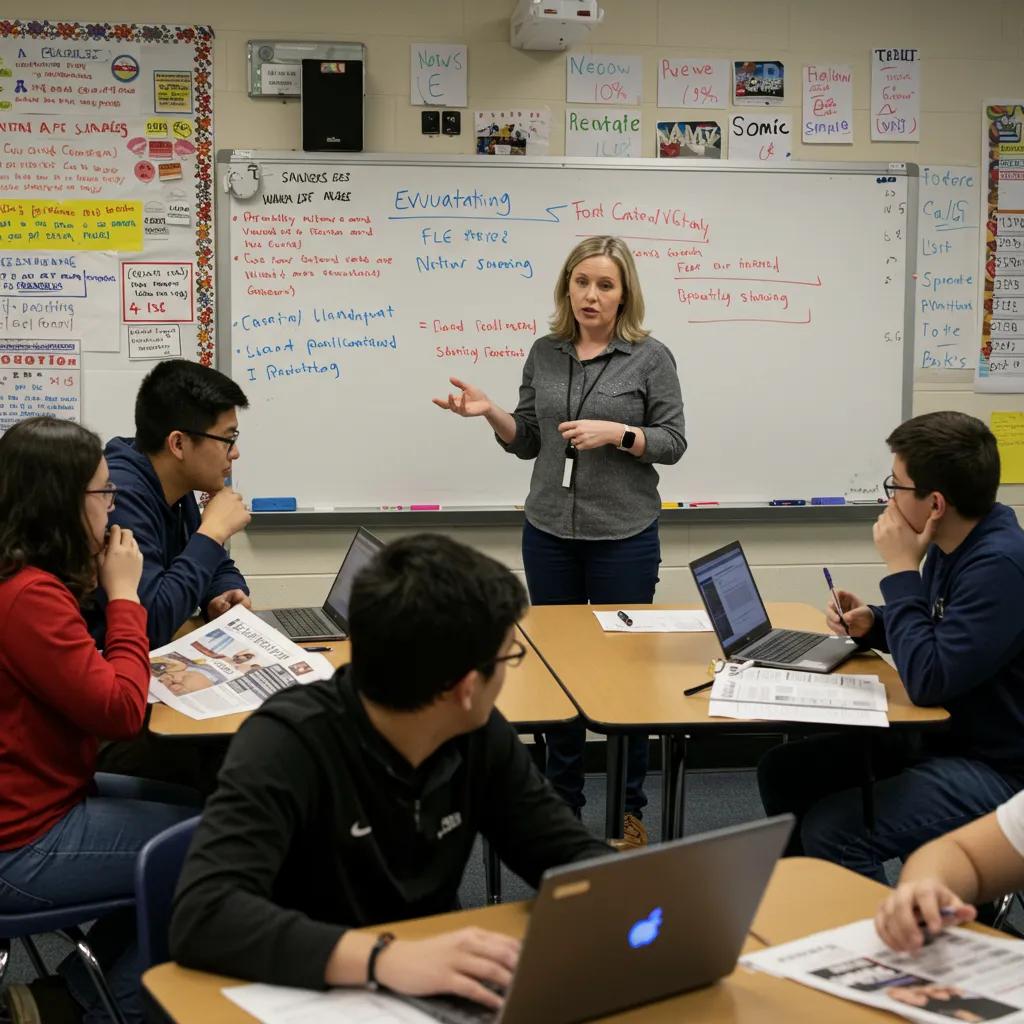
Effective instruction leverages active learning, scaffolded practice, and assessments that measure both process and outcomes; educators should design lessons that require students to verify claims, compare sources, and produce evidence-backed summaries. Start with brief, repeatable activities that emphasize lateral reading and source triangulation, then advance to multi-week projects where students research a topic, document their sources, and present a credibility report. Assessment should incorporate rubrics that evaluate evidence quality, source transparency, and the ability to identify bias and logical gaps. The next section provides step-by-step source-evaluation techniques that teachers can implement in the classroom.
Practical source-evaluation techniques offer students a repeatable rubric for assessing content quality, focusing on author authority, domain credibility, evidence, and timeliness. A classroom checklist might include verifying author affiliation, checking for primary-source citations, comparing coverage across reputable outlets, and seeking editorial transparency such as correction policies.
Teachers can transform this checklist into a concise in-class activity: assign an article, have students apply the rubric, and then discuss discrepancies in small groups. This activity prepares students for more extensive curriculum modules described in the following section.
Lesson plans that support news literacy education balance analysis, production, and reflection across a modular scope and sequence, allowing skills to compound over time. A four- to six-week unit might begin with short lateral-reading drills, progress to source-evaluation labs, require students to write a brief news analysis, and culminate in a verification portfolio presentation. Each module includes formative checkpoints—peer reviews, rubrics, and instructor feedback—ensuring that assessment measures both skill development and application. Aligning tasks with standards for media literacy and digital citizenship guarantees transferability and provides clear learning objectives for administrators and parents.
The scalability of these teaching strategies into classroom practice relies on consistent routines and teacher support; professional development that models verification workflows and supplies ready-to-use rubrics accelerates adoption. Educators benefit from exemplars, annotated lesson plans, and classroom materials that reflect authentic research tasks students encounter outside of school. With these supports, teachers can cultivate students’ critical thinking while maintaining classroom pacing and assessment accountability. These instructional anchors naturally lead into community and public-facing strategies for combating misinformation online.
What Are the Most Effective Strategies for Combating Misinformation Online?

Combating misinformation necessitates a prioritized workflow: pause to assess intent, verify source authority, cross-check claims with independent outlets, and refrain from amplification until verification is complete. This concise checklist aids users in acting swiftly and safely when encountering questionable content online.
- Pause before sharing: Take a moment to reflect on the claim and whether it merits amplification.
- Check the source: Verify the author, domain, and publication reputation before placing trust in the piece.
- Cross-check the claim: Seek corroboration from independent, reputable outlets.
- Inspect the evidence: Confirm citations, dates, and primary sources rather than accepting summaries at face value.
- Report and contextualize: Report harmful misinformation when applicable and provide context if you must discuss it publicly.
These steps prioritize safe responses and minimize accidental spread, and the next paragraph outlines red flags and bias indicators to scan quickly.
To identify fake news and media bias, watch for sensational language, missing sourcing, altered images, and sites that mimic reputable outlets; annotating a headline with these red flags trains pattern recognition. Rapid heuristics—such as checking the URL for subtle alterations, verifying the date, and scanning the article for primary-source links—help users triage content efficiently. Classroom exercises can present annotated headlines and prompt students to list likely manipulations and the next verification step. These hands-on annotations seamlessly transition into concrete verification techniques that follow.
Before introducing tools, here is a comparative table that clarifies common misinformation types, detection cues, and recommended actions for readers and educators. The table translates typology into practical next steps.
This comparison aids readers in prioritizing verification techniques based on the manipulation method and reduces time spent on low-risk content.
Next, a focused overview of fact-checking tools and techniques explains how to apply browser features, archives, and image verification in a stepwise workflow. Practical tool use follows a verification sequence: identify claim → locate original source → utilize archive and reverse-image tools → confirm with independent outlets. Rely on reputable fact-checking organizations and built-in browser inspection to avoid over-reliance on a single heuristic. The next section explores how critical thinking connects to responsible online citizenship and privacy.
How Does Critical Thinking Enhance Digital Citizenship Skills?
Critical thinking fortifies digital citizenship by promoting verification before sharing, respecting privacy when handling others’ data, and ethically considering how information impacts communities. When users critically evaluate information, they are less likely to amplify manipulative content and more inclined to consider consent, context, and potential harm before posting. These habits foster healthier online communities and mitigate the spread of targeted misinformation. The following subsections provide concrete sharing rules and discuss the role of privacy and data literacy in exposure and credibility.
Responsible online sharing practices are straightforward rules-of-thumb that limit accidental amplification and enhance public discourse. Verify before sharing, add context when reposting, use quotes and links to primary sources when available, and report content that appears intentionally deceptive or harmful. Teaching these habits with classroom slogans and platform-specific tips helps users internalize quick checks that align with social workflows. These practical sharing guidelines naturally connect to privacy and data literacy, as understanding how personal data shapes feeds influences what users see and trust.
Privacy and data literacy elucidate how algorithmic curation, targeting, and personalization shape news exposure and perceived credibility; grasping these dynamics helps users interpret why they receive certain content. Algorithms can create echo chambers by prioritizing engagement signals that reward sensationalism, while advertisers and data brokers enable precise microtargeting that can deliver tailored misinformation. Practical privacy steps—reviewing privacy settings, limiting permissions for data-hungry apps, and auditing ad preferences—reduce the volume of manipulative content in personal feeds. Recognizing how data flows influence exposure empowers users to better evaluate why a claim reached them and encourages more careful verification before acting.
Understanding the connection between critical thinking, sharing practices, and data literacy prepares users for the emerging challenge of AI-generated content, which the next section examines in terms of both risk and verification opportunity.
How Is Artificial Intelligence Shaping News Literacy and Critical Thinking?
AI accelerates the spread of misinformation through realistic synthetic content while also providing new verification tools that can scale fact-checking; the net effect hinges on how users and platforms leverage AI capabilities. AI-generated text and media can mimic tone, fabricate citations, and craft persuasive narratives at scale, heightening the speed and realism of misinformation. Conversely, AI tools can automate entity extraction, surface primary sources, and summarize multiple accounts to facilitate lateral reading and verification. The following subsections outline practical AI-assisted fact-checking use cases and catalog the specific challenges posed by AI content.
AI tools enhance verification by swiftly summarizing large volumes of content, extracting named entities, and flagging inconsistencies across sources, which reduces research time for users and educators. For instance, AI-driven browsers and productivity tools can highlight original reporting, spotlight disputed claims, and suggest primary documents to consult, enabling quicker lateral reading. However, users must treat AI outputs as starting points rather than definitive answers, as models can hallucinate or present unverified claims with confidence. The best practice is to use AI to uncover leads and then verify those leads through primary-source checks and reputable human fact-checkers.
Since kytox covers AI browsers and productivity tools in its technology guides, readers can find explanatory reviews detailing how these platforms integrate verification features and where they may fall short. The site’s informational reviews aim to illustrate how AI browsers and tools—such as specialized AI-driven research assistants—can expedite fact-finding while also cautioning against limitations like over-reliance on model outputs. By positioning AI tools as enhancers of human workflows rather than complete replacements, learners can use them responsibly to bolster critical thinking and minimize verification time.
AI-generated content poses challenges to news literacy by amplifying the scale, realism, and personalization of deception, which increases cognitive load and disrupts instinctive checks. Tailored persuasion exploits confirmation bias and microtargeting, while realistic deepfakes undermine trust in authentic media; these developments necessitate updated verification skills and tools capable of managing scale. An effective response combines improved user habits, platform-level detection, and accessible verification tools, enabling individuals to keep pace with AI-driven threats without compromising critical evaluation standards.
What Practical Exercises and Habits Cultivate Strong Critical Thinking Skills?
Daily practices and concise, focused exercises are the most reliable means of transforming news literacy theory into enduring critical thinking habits; routine micro-practices paired with periodic deep-validation projects yield lasting skill development. Begin with micro-habits that take one to five minutes and progress to weekly verification projects that demand deeper research and reflection. The following subsections present immediate habits and group practices, such as debates, that reinforce reasoning and bias recognition.
Adoptable daily critical-thinking habits mitigate impulsive sharing and enhance source judgment through small, repeatable actions individuals can perform with each news encounter. The list below outlines seven micro-habits that align with common social and browsing behaviors.
- Pause and ask who benefits: Before sharing, consider who stands to gain from this message spreading.
- Quick source check: Scan the domain, author, and publication date before placing trust in a claim.
- Lateral read for one minute: Open a new tab to see how other outlets report the same claim.
- Inspect evidence links: Click through to cited sources rather than relying on summaries.
- Reverse-image check: If an image catches your eye, run a reverse-image search for context.
- Annotate before reposting: Add a sentence explaining why you believe the content is credible or questionable.
- Log a verification habit: Maintain a brief personal log of verification steps you took for complex claims.
These micro-habits create consistent pauses and verification triggers that transform sharing behavior, and the next paragraph elaborates on how debate and discussion extend these skills into group reasoning.
Lateral Reading and Strategic Thinking in Digital Source Evaluation by High School Students
Using screencasting videos as think-alouds, this case study explores the process three high school seniors used when tasked with evaluating digital sources. Drawing from dual level theory of literacy, the study examines the complexities involved when students are asked to conduct informal research of their source (a strategy called lateral reading) to enhance their ability to uncover potential bias in digital sources. Results indicate that lateral reading encouraged healthy reader skepticism and slowed readers down in the review, but students lacked sophisticated online reading and research strategies.
Making moves: Lateral reading and strategic thinking during digital source evaluation, 2003
Structured debate and discussion foster critical thinking by compelling participants to articulate evidence, challenge assumptions, and reflect on the quality of reasoning in a social context. Utilize formats like short evidence-based debates where each side presents sources, and the audience evaluates the credibility of evidence and argument structure. Facilitation tips include time-limited research segments, explicit criteria for source acceptance, and reflective debriefs that surface cognitive biases encountered. These group exercises promote metacognition and expose participants to diverse perspectives, strengthening their inclination toward careful information evaluation.
To assist readers in planning practice routines, the table below lists practical exercises with the targeted skill and recommended frequency or time commitment to foster measurable progress.
This plan enables learners to align exercises with realistic time budgets and track steady improvement.
For digital tool support, consider AI browsers and productivity aids as optional accelerants for these exercises; tools can surface sources, summarize documents, and automate initial reverse-image searches. For example, AI-assisted research features in modern browsers can expedite lateral reading by extracting named entities and suggesting original reports, but users must still verify those suggestions through primary documents. Position tools as aids that alleviate busywork while ensuring human judgment remains central to verification.
By integrating micro-habits, debate practice, and targeted use of AI-assisted features, learners and educators can steadily cultivate critical thinking that withstands evolving misinformation tactics.
What Daily Critical Thinking Habits Enhance News Evaluation?
Daily habits that scale include consistent verification triggers, brief reflective practices, and small accountability mechanisms that make critical thinking second nature. Habit formation begins with a commitment to a set of brief checks—such as a one-minute lateral read and a quick source verification—performed whenever encountering news. Tracking progress through a simple log or shared classroom rubric reinforces the behavior and supports skill assessment. Over time, these micro-practices generalize to more complex tasks like independent verification projects and public-facing fact checks, closing the loop between routine habits and deeper analytical ability.
Teaching Critical Thinking Skills for Educators: Analyzing Texts and Media for Empowering Students
En esta investigación conceptual, proporcionamos una guía para que los educadores utilicen el pensamiento crítico (PC) para: (1) Evaluar críticamente su enseñanza, (2) Dirigir las próximas interacciones con los estudiantes, y (3) Instruir a los estudiantes para que se empoderen, mediante el análisis crítico de textos y medios. Para llevar a cabo este concepto, aprovechamos los siguientes elementos: Los núcleos del PC de Erstad en Fatiha (2021), las preguntas del PC de Paul y Elder (2019) y los pasos de la enseñanza del PC de Chernyak en Kiki (2019). Además, se predijo que el uso de noticias que contienen controversias habilitaría las habilidades del PC de los estudiantes y se convertiría en material auténtico. Por otro lado, el proceso de enseñanza del PC se realizó en tres partes que cumplimentaban los siguientes objetivos: a) Alentar a los estudiantes a tener una mente abierta, b) Ayudar a los estudiantes a hacer conexiones y, c) Enseñar a los estudiantes sobre informa
Applying Critical Thinking in Differentiating Between Factual and Fake News: A Guide for Educators, M Nurfazri, 2025
How Can Debate and Discussion Foster Critical Thinking in News Literacy?
Debate and discussion enhance critical thinking by rigorously testing assumptions, compelling evidence-based argumentation, and revealing cognitive biases through group feedback. Employ structured prompts that require participants to defend or critique a claim using primary sources, rotate roles to argue opposing viewpoints, and include an evaluation rubric that emphasizes evidence quality, source reliability, and logical coherence. Facilitators should debrief to highlight common biases and guide reflection on how evidence choices influenced conclusions. These social practices accelerate learning by transforming abstract verification steps into interactive reasoning experiences that are applicable to everyday news consumption.
This repeated table reinforces scheduling options, allowing learners to select a practice rhythm that fits their lives and observe steady improvement in news evaluation skills.
The article concludes here after covering definitions, teaching strategies, verification workflows, digital citizenship connections, AI impacts, and practical exercises to assist educators and general internet users in teaching and practicing critical thinking through news literacy.
Frequently Asked Questions
What are the key components of news literacy education?
News literacy education encompasses several core components, including access, analysis, evaluation, and creation of news content. Access involves understanding search strategies and recognizing different content formats. Analysis focuses on dissecting argument structures and evaluating evidence. Evaluation assesses the credibility, bias, and timeliness of information. Finally, creation emphasizes producing responsibly sourced content and properly citing evidence. Together, these components form a comprehensive framework that helps individuals navigate the complexities of digital media and enhances their critical thinking skills.
How can parents support their children’s news literacy at home?
Parents can play a crucial role in fostering news literacy by engaging their children in discussions about current events and media consumption. Encourage them to ask questions about the sources of information they encounter and to verify claims before sharing. Setting up family activities, such as analyzing news articles together or exploring fact-checking websites, can also be beneficial. Additionally, modeling critical thinking by demonstrating how to evaluate sources and recognize bias will help children develop these essential skills in their everyday lives.
What role does technology play in enhancing news literacy?
Technology significantly enhances news literacy by providing tools that facilitate verification and critical analysis of information. AI-driven applications can assist users in quickly summarizing content, identifying credible sources, and flagging inconsistencies. Additionally, browser extensions and fact-checking websites offer resources for users to cross-check claims and validate information. However, while technology can streamline the verification process, it is essential for users to maintain a critical mindset and not rely solely on automated tools, as they can sometimes produce inaccurate results.
How can educators assess students’ news literacy skills?
Educators can assess students’ news literacy skills through a combination of formative and summative assessments. Formative assessments may include rubrics that evaluate students’ ability to analyze sources, recognize bias, and produce evidence-backed summaries. Summative assessments can involve projects where students research a topic, document their sources, and present their findings. Additionally, peer reviews and group discussions can provide insights into students’ understanding and application of news literacy concepts, allowing educators to tailor instruction to meet their needs.
What are some common misconceptions about news literacy?
One common misconception about news literacy is that it only involves identifying fake news. In reality, news literacy encompasses a broader set of skills, including evaluating credible sources, understanding bias, and recognizing the intent behind information. Another misconception is that news literacy is solely the responsibility of educators; in fact, it requires collaboration among parents, educators, and the community. Lastly, some believe that technology alone can solve misinformation issues, but critical thinking and active engagement are essential for effective news literacy.
How can individuals practice news literacy in their daily lives?
Individuals can practice news literacy daily by adopting simple habits that promote critical thinking. For instance, before sharing any news, they should pause to consider the source and verify its credibility. Engaging in lateral reading—checking how other reputable outlets cover the same story—can also enhance understanding. Additionally, individuals should make it a habit to inspect evidence links and citations in articles. Keeping a personal log of verification steps taken can further reinforce these practices and help develop a more discerning approach to information consumption.
Conclusion
Mastering news literacy is essential for navigating today’s complex digital landscape, empowering individuals to critically assess information and combat misinformation effectively. By adopting practical strategies such as lateral reading and source verification, users can enhance their decision-making skills and contribute to healthier online discourse. We encourage you to explore our resources and tools designed to support your journey in becoming a more informed digital citizen. Start implementing these techniques today to elevate your critical thinking and media literacy skills.